Sunday, October 2, 2011
It's October! Let's review some scary sh*t.
Look: I never thought this would be me. I was always that girl literally welling up with tears of fright at the intimation of the realness of ghosts. I was that toddler who, before I should have had the logical capacity for such a construction, paused in the middle of a game played in my Grandma's basement to peer around the dark corners beyond the room, and to tell my uncle, "I'm not scared now, but I think I will be soon."
So, yeah. I never thought I would be the one curling up in the dark, happily watching the Winchester boys get thrown from here to hell and back in darker and darker ways; I never thought I would put an album like Dead Man's Bones—complete with children's choir and eerie clapping—on loop every day, every October, even IF Ryan Gosling is the mastermind; I never thought I'd be devouring, and easily, spooktastic books like ANNA DRESSED IN BLOOD and THE REPLACEMENT, books which give heft to the fears of the dark I grew up with.
But apparently that is me. So, in honor of my bloody, mercurial heart, and in anticipation of Neil Gaiman's All Hallow's Read, let's do October right. I haven't used this blog for reviews before, but this month that is the name of the game: Creepy, spooky, chilling reviews.

Saturday, October 1, 2011
Maybe the Cover WANTS to Be Judged (Or, Reading out of Context)
This is, as she rightly points out, a very rare circumstance to find yourself in these days, in this country, where what is mainstream and domestic is almost always familiar, and what is indie or foreign is specially curated and marketed.
However, to find a book that lacks coding, for you, is not nearly so difficult—at least for the general public. Going to the library, where shelves are loaded not according to inventory and best-seller lists and sales goals, with recent titles rubbing covers with those years, decades, more old, offers the average reader the opportunity to pick up books almost in a vacuum. It looks good, check it out; it doesn't, put it back.
It's good now and then, though, to see something where, for you, there's absolutely no coding in it at all. Obviously, the marketing of a movie often sends unmistakable signals about where it's going and who the good and bad guys are before you ever get there. A story of a good and a bad brother, for instance, will tell you who's who in the commercials. Even if you don't get it from the commercials, there's a decent chance you'll get it from the casting. You'll get it from the way the two are shot from the opening sequence forward. You'll get it from the score.When you don't know anything – what tradition the film is in, what its genre is, how it would be marketed, or who the target audience is – not only do you see that film differently, but you see other films differently, too. The lack of signals is palpable and initially unsettling because the experience is so rare, but like any negative space, it draws a kind of attention to itself.
 |
| Good for a cover, isn't it? |
Since, my entire TBR list has consisted of titles I've read up on on Goodreads, or on blogs, or heard about from other writer friends.
These are titles I need to read to stay current in my category or genre, or to stay current with cultural literacy (though, please, no Franzen for this girl). I have three library memberships, one for digital titles (thanks, Oregon, for still letting me play), one for paper books (thanks, Dad, for letting me cling to your account), and one to keep me tethered to home (thanks, Wyoming, for being the best library system ever), and all of them have hold lists that I couldn't manage to finish by Christmas—without taking into account books I buy.
 |
| Why wouldn't I pick this up? |
But that has haunted me, that decision. I am independent-minded! I am my own person! I am…well, under-funded and wary of spending money almost anywhere, but. I buy books! Why in the world couldn't I bear to buy this book—with its black-edged pages, its shiny, metallic cover, its odd, long proportions—out of context?
I should know well enough to embrace that negative space, that lack of coding, and find value in it. I SHOULD KNOW BETTER.
So that is my middle of the year, forget ceremony and pomp and champagne, real and true resolution: to get back to reading out of context. To pull books from the shelf I know nothing about, authors I know nothing about.
And thanks for all the fish, internet.
Saturday, September 3, 2011
But Seriously
You want to talk inspiration?
THIS:

I mean, right?
This is our property on Casper Mountain, in Wyoming. IN JULY. People, Wyoming is that green like, once a year. One single day. In MAY. But July?
Leaving this behind for the East Coast, even knowing we will always own it and can forever return, was hard.
Luckily, I have my WIP. Which is like all *makes wobbly hand motions* THAT, all the time. In my head.
Also, this (Black Dub's Tiny Desk Concert at NPR, which I may have already posted, but COME ON):
So that is a peek into my brain as I'm doing revisions.
What's in all yours?
THIS:

I mean, right?
This is our property on Casper Mountain, in Wyoming. IN JULY. People, Wyoming is that green like, once a year. One single day. In MAY. But July?
Leaving this behind for the East Coast, even knowing we will always own it and can forever return, was hard.
Luckily, I have my WIP. Which is like all *makes wobbly hand motions* THAT, all the time. In my head.
Also, this (Black Dub's Tiny Desk Concert at NPR, which I may have already posted, but COME ON):
So that is a peek into my brain as I'm doing revisions.
What's in all yours?
Wednesday, August 24, 2011
RTW: Writer's Block as Decision Fatigue, or How to Build a Better Bulldozer
How do you get past writer's block?
and I wasn't sure if I was going to participate because
a) I am, at the moment, in the middle of the ice-fragile stage right AFTER writer's block wherein any iota of attention paid to the prospect of not being able to move forward might paralyze me, and
b) I don't really know how I got there, except for just saying to my brain, "welp, time to move on."But then I was reading that fascinating article in the NYT about decision fatigue, and it occurred to me, that is EXACTLY what writer's block is. Because what is writing, if not a series of decision after decision after decision?
The more choices you make throughout the day, the harder each one becomes for your brain, and eventually it looks for shortcuts, usually in either of two very different ways. One shortcut is to become reckless: to act impulsively instead of expending the energy to first think through the consequences. (Sure, tweet that photo! What could go wrong?) The other shortcut is the ultimate energy saver: do nothing. Instead of agonizing over decisions, avoid any choice.So yes. We're not real-life judges choosing which prisoners get paroled or don't, but we are doing the same things for our characters, our worlds, our words. I mean, last night it took me a good five minutes to get from this:
Did she believe her now that this hungover Brandi had been forced out by the petite blonde?
to this:
Did she believe her now, now that this hungover Brandi had been forced out by the petite blonde?
to this:
Did she believe her now, now that this hungover Brandi had evidently been forced out by the petite blonde?
Tiny changes, and ones that today I'm not even sure I approve of. Which makes sense, since they were the last things I managed to accomplish before I had to give in to exhaustion and sleep, or risk feeling too overwhelmed by minutiae to go on (the second, full-stop, side-effect of decision fatigue). And that's not even considering the larger, major structural changes I was trying to work through before nit-picking that last page.
So if writing is all decision making, and writer's block is decision fatigue, then according to the article, the best way to solve it is by…
(wait for it)
Glucose, specifically, and while I could make a joke about all that Bonnaroo Buzz I've been into lately, or about the average writer's penchant for chocolate anything*, the real advice being given by the scientists is to Just. Eat. Better. All the time. More proteins, more whole foods with natural glucose (thank goodness for peach season).
Glucose, however, isn't everything.
So how else do you build yourself a better bulldozer?
You learn not to trust yourself. Or rather, WHEN not to trust yourself:
“Good decision making is not a trait of the person, in the sense that it’s always there,” Baumeister says. “It’s a state that fluctuates.” His studies show that people with the best self-control are the ones who structure their lives so as to conserve willpower. They don’t schedule endless back-to-back meetings. They avoid temptations like all-you-can-eat buffets, and they establish habits that eliminate the mental effort of making choices. Instead of deciding every morning whether or not to force themselves to exercise, they set up regular appointments to work out with a friend. Instead of counting on willpower to remain robust all day, they conserve it so that it’s available for emergencies and important decisions.
“Even the wisest people won’t make good choices when they’re not rested and their glucose is low,” Baumeister points out. That’s why the truly wise don’t restructure the company at 4 p.m. They don’t make major commitments during the cocktail hour. And if a decision must be made late in the day, they know not to do it on an empty stomach. “The best decision makers,” Baumeister says, “are the ones who know when not to trust themselves.”
So how do we apply this to writer's block? Because writers don't want to just avoid bad decision making (that surly troll can always be cut out of—or added back INTO—the scene later), but that other wall hit by the mentally fatigued, the one where it's easier to make NO decision than risk a bad one. I'd imagine something reasonable and familiar-sounding, like
• establishing a writing schedule, and sticking to it no matter what (even better if you have a motivation buddy/crit partner to commit to something similar with you).
• writing as early in the day as possible, and making sure not to write on an empty stomach if you can't get to it until later in the day.
• make a habit/schedule of as many other things in your life as possible, to avoid having to add those decisions to your plate on a daily basis. Make a grocery list you will STICK to before shopping; make a meal plan for the week, so you don't stress about it three times a day; embrace the romanticism of chance by just reading the first book on your TBR pile instead of digging through each day and mulling, by just letting Netflix send you whatever's next instead of obsessing over what you might feel like watching in two days, even by ordering library books for hold instead of wandering the aisles aimlessly for an hour (although the joy of finding a gem in the stacks shouldn't be avoided always—maybe just when a deadline is looming). I am sure there are plenty of other things that can be turned into habit to free up mental decision-making energy, but that's at least a start.
As with anything simple, this won't be easy. Not for me, anyway. But I think thinking about writer's block in terms of decision fatigue, and trying to solve it with approaches used FOR decision fatigue, is something that I can embrace.
Now fingers crossed it works…
*my own ambivalence towards chocolate, I realize—along with the fact I couldn't feel the earthquake in MD yesterday, and watched a driveways full of shaking cars thinking, "huh, wonder why that huge gust of wind missed me"—makes me seem something other than human. I'm just going to go with Superhuman, call myself that. That sounds better (than crazy, I mean).
Wednesday, August 17, 2011
RTW: Inspired Spaces
Let's not even talk about the month+ I've been away. Let's not even talk about it.
Road Trip Wednesday! Let's talk about that. In an effort to be THE MOST BROAD EVER, this week's prompt is What is the most inspiring setting you've ever visited in real life?
Broad is good. I can do broad.
However. I am from Wyoming. I mean, talk about inspiring settings:
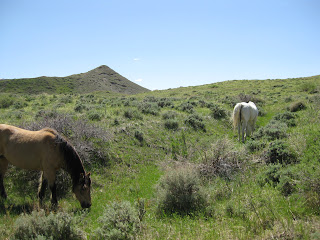
So I do feel a bit biased. And to be honest, it is THAT setting—open spaces, big sky, epic wild epicness—that really has inspired the majority of my writing.
That said, Swiss Day in the Alps was a thing of legend:
…and if THAT doesn't show up sometime, in SOMETHING I write, I'll probably have to wear a big old FAIL sign around my neck. Because, I mean. Look at that.
What do you know? I'm feeling inspired ALREADY.
Alright, WIP. Let's get cracking.
Road Trip Wednesday! Let's talk about that. In an effort to be THE MOST BROAD EVER, this week's prompt is What is the most inspiring setting you've ever visited in real life?
Broad is good. I can do broad.
However. I am from Wyoming. I mean, talk about inspiring settings:
 |
| I'm EXUDING inspired here, just EXUDING. |

 |
| I mean, we only boarded our horses here because it was convenient…nevermind the view. |
 |
| Yeah, we have a mountain, too. |
 |
| And horizons for days. |
 |
| That's Devil's Gate. I live near it. No biggie. |
So I do feel a bit biased. And to be honest, it is THAT setting—open spaces, big sky, epic wild epicness—that really has inspired the majority of my writing.
That said, Swiss Day in the Alps was a thing of legend:
 |
| Sunset hike up the opposite side of the valley… |
 |
| TIIIIINY bonfires burning on distant ridges. JUST LIKE THE BEACON FIRES IN ROHAN. |
 |
| Because the moon didn't think things were dramatic enough… |
 |
| This. |
 |
| THIS. |
 |
| COME ON—THIS. Right? |
Alright, WIP. Let's get cracking.
Subscribe to:
Posts (Atom)